
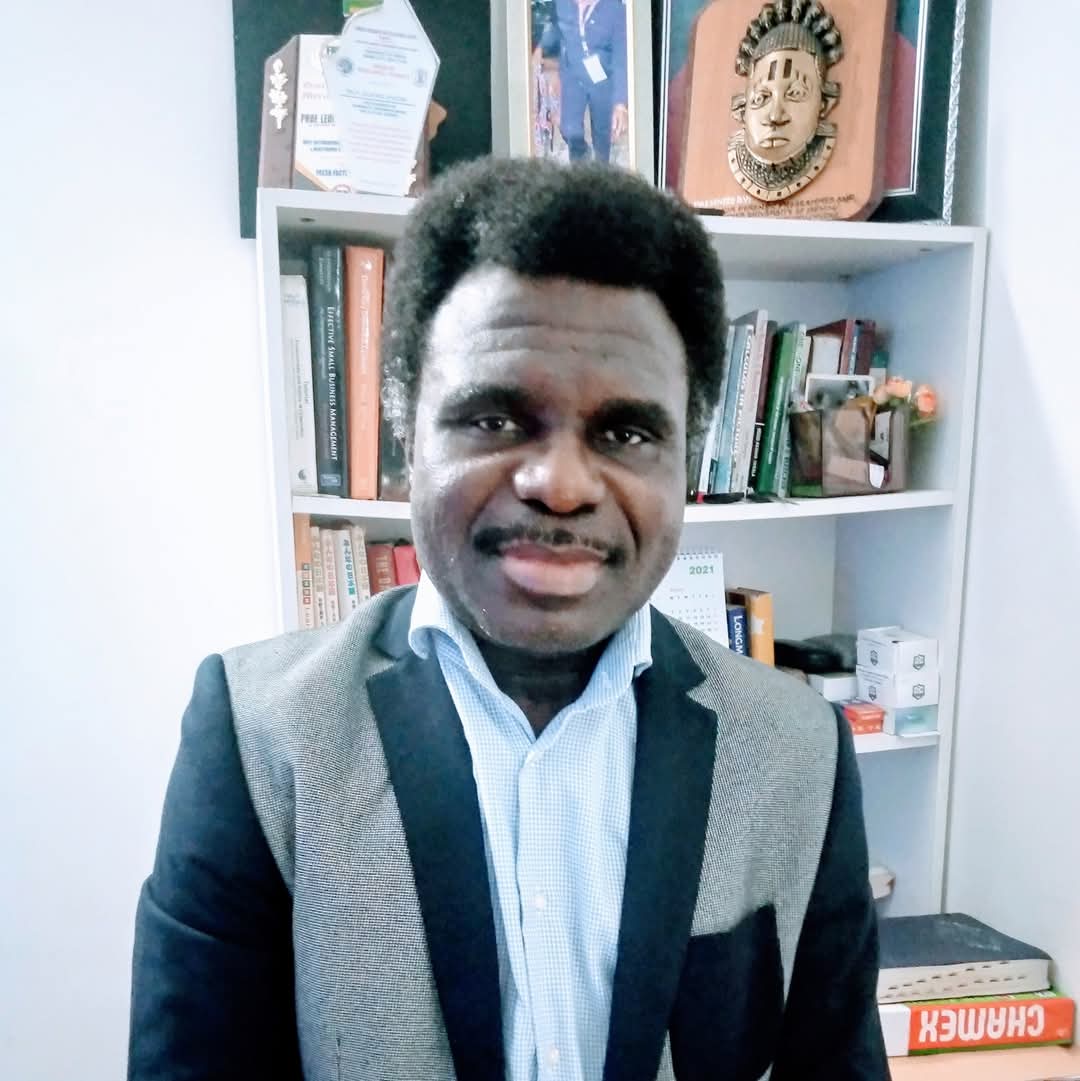
Leonard Karshima Shilgba
On April 6, 2024, in the early months of his administration, President Bola Ahmed Tinubu suspended then-Minister of Humanitarian Affairs, Dr. Betty Edu, over the approval of N585 million to be paid into a private account for grant disbursements. The President’s swift action was seen as a welcome signal of zero tolerance for fiscal misconduct.
However, a more recent and far weightier scandal involving N10 billion allegedly misappropriated by Terhile Uchi, a close aide of the Secretary to the Government of the Federation (SGF), Senator George Akume, now hangs like a dark cloud over that early promise.
The optics are bad; the silence is worse:
SaharaReporters revealed that Uchi, described as a long-serving personal aide of Senator Akume, was arrested in connection with the diversion of at least N10 billion in government funds. This sum exceeds the annual budgets of some Nigerian federal universities and is more than a month of federal allocation to an entire “small-size” state in Nigeria. That someone this close to the SGF could access such an amount raises urgent questions:
- Who is Terhile Uchi?
- What official capacity did he hold?
- How did he gain access to the funds?
- Was this within the constitutional responsibilities of the SGF’s office?
- Could he have had this access without Akume’s authorization or protection?
A Principal’s Responsibility:
Let us be clear: Aide misconduct at this scale should not be treated as an isolated anomaly. Political aides derive their legitimacy and access from the office of their principal. The SGF cannot detach himself from the conduct of a man he empowered.
In democracies that value integrity, such a scandal would have prompted an immediate resignation or at the very least, a suspension. Yet, Akume remains in the office of SGF in spite. Worse, tribal and political apologists have begun attacking those calling for his suspension—as if the ethical question is about ethnicity or partisanship.
There are several notable instances globally where senior political office holders resigned (or were forced to resign) due to the malfeasance or criminal activities of close aides, associates, or appointees, even when they were not directly implicated. These examples demonstrate the principle of ministerial responsibility or the “buck stops here” ethos in action. By the way, public officials are responsible for whom they choose as aides, and must not claim to be unaffected by their criminal actions while serving them in public office:
1. Shinzo Abe (Japan, 2007):
- Position: Prime Minister of Japan
- Reason for resignation: Although not directly implicated, Abe resigned amid scandals involving misuse of public funds by cabinet ministers and the suicide of his agriculture minister under investigation. The public perceived the scandals as reflective of Abe’s poor leadership and failure to maintain ethical governance.
- Lesson: High standards of accountability in Japanese politics forced the top leader to take responsibility for his subordinates’ misconduct.
2. Peter Mandelson (UK, 1998 & 2001):
- Position: Secretary of State (UK)
- Reason for resignation (1998): Resigned over a secret loan he received from a fellow minister’s aide, which created a conflict of interest—even though it was not illegal.
- Reason for resignation (2001): Resigned again after accusations of improper intervention on behalf of a wealthy businessman.
- Lesson: The UK political culture values perception and integrity highly, prompting resignation even when misconduct was by associates or merely suspected.
3. Alberto Fujimori (Peru, 2000):
- Position: President of Peru
- Reason for resignation: His resignation came amid a massive corruption scandal involving his close aide and intelligence chief, Vladimiro Montesinos, who was caught on video bribing officials. Fujimori fled the country and resigned by fax.
- Lesson: Aide misconduct led to the total collapse of public trust and the administration. 4. Richard Nixon (USA, 1974):
- Position: President of the United States
- Reason for resignation: Resigned due to the Watergate scandal, which started as a break-in organized by campaign aides. The cover-up and involvement of close staff (not Nixon’s personal act of burglary) brought him down.
- Lesson: Even if not directly responsible, the use of aides for illegal political ends resulted in forced resignation. 5. Francois Fillon (France, 2017 Presidential Candidate, Former PM):
- Position: Former Prime Minister and Presidential candidate
- Reason for resignation: His campaign collapsed after revelations that his wife and children were paid large sums as parliamentary assistants without doing actual work.
- Lesson: Public perception of using close aides or family to siphon funds caused political ruin, even without court conviction at the time. 6. Seiji Maehara (Japan, 2011):
- Position: Foreign Minister
- Reason for resignation: Resigned after it was revealed that a foreign national had donated a small sum to his campaign fund, violating Japan’s campaign finance law. The donor was a friend, not an official, but Maehara resigned to preserve public trust.
- Lesson: Even minor violations by associates prompted resignation in line with public accountability.
Contrast with Nigeria:
In Nigeria, however, the principle of resignation due to aide malfeasance is rarely upheld. Most public officials remain in office unless removed by force of public outcry or presidential will. This is what makes the inaction on SGF Akume’s case even more alarming when contrasted with President Tinubu’s decisive suspension of Betty Edu, setting Nigeria on an admirable path of public accountability and transparency.
Compare with Betty Edu.
President Tinubu didn’t flinch when questions arose about Edu’s modest N585 million approval. Yet, he is silent in the face of an alleged ₦10 billion theft involving an aide who operated inside the SGF’s inner circle. Could President Tinubu’s silence be strategic to hit at the right time of his strategic choosing? Maybe only he knows, but the optics remain bad.
Are we now to believe that political weight determines accountability? Is Akume too valuable to be suspended? Is selective outrage now the standard for justice? President Tinubu holds the answers.
The Stakes for Justice:
The SGF coordinates federal ministries and oversees dozens of agencies. His continued stay in office risks intimidating or obstructing EFCC investigators. Nigerians must ask: Can the EFCC credibly “follow the money” if the man whose office gave Uchi access to billions is still at the helm?
We must not forget: Justice is not only about outcome; it is also about process and public confidence.
President Tinubu’s Test:
As your administration approaches its midterm, Mr. President, the choices you make now will define your legacy. Nigerians, including Betty Edu, are watching to see if you will demonstrate fairness or fold under political considerations.
Suspend SGF Akume to enable full, credible investigations. That is what you did with Edu. Anything less will confirm suspicions of selective integrity and political hypocrisy. And as your supporter, my hunch is that you will not sacrifice equity.
Let justice not wear tribal robes. Let it be blind, as it should be. For Nigeria’s sake. May President Tinubu’s government prosper for the benefit of all Nigerians. Happy second anniversary in advance, Mr. President!
Sources:
- SaharaReporters, “SGF Akume’s Aide Arrested For Allegedly Misappropriating ₦10 Billion,” April 2025.
- Premium Times, “Tinubu Suspends Minister Betta Edu Over N585m Grant Controversy,” January 8, 2024.
- BudgIT Nigeria, “State Allocations and University Budgets: Federal Data 2022-2024.”
- The Guardian, “The Office of the SGF: Roles and Influence in Nigeria’s Executive Governance,” July 2022.
© Shilgba
 News Editor