
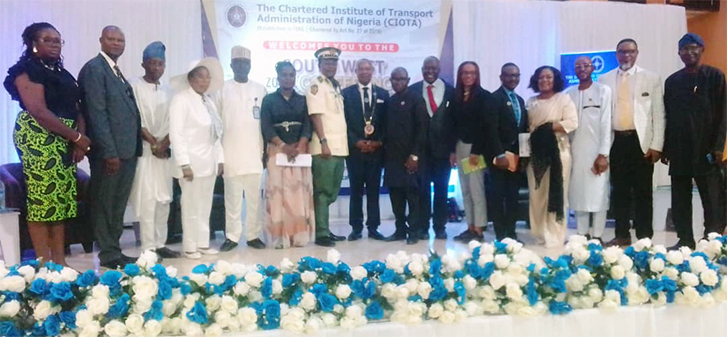
At the recent Southwest Zonal Conference of the Chartered Institute of Transport Administration (CIOTA) held in Yaba, Lagos, transportation and logistics were highlighted as pivotal to economic growth and sustainable development. The event saw key figures and experts discussing the critical role these sectors play in shaping Nigeria’s future.
Keynote Address and Insights
Honourable Commissioner for Transportation, Lagos State, Mr. Oluwaseun Osiyemi, represented by Engr. Aderounmu Agbomeji, emphasized the importance of an efficient and sustainable transport system. He outlined Lagos State’s progress and future plans, including:
- Land Transport: Expansion of the Bus Rapid Transit (BRT) system, road networks, light rail systems, and multimodal transport hubs.
- Innovative Technologies: Introduction of electric buses, smart traffic management systems, and a digitalized permit system for courier operators.
- Air Transport: Modernization of Murtala Muhammed International Airport and plans for a state-owned airport in Ibeju Lekki.
- Water Transport: Expansion of ferry services and new high-capacity ferries to alleviate road congestion and utilize Lagos’ extensive waterways.
Osiyemi also highlighted the importance of effective partnerships and funding mechanisms, including public-private partnerships, to drive the development of transport infrastructure.
CIOTA President’s Address
Prince Segun Obayendo, President of CIOTA, stressed the crucial role of transportation and logistics as the backbone of the economy. He urged participants to embrace sustainability and innovation to meet the demands of the evolving global landscape.
Keynote Speaker Professor Iyiola Oni
Professor Iyiola Oni from the Centre for Multimodal Transport Studies at the University of Lagos discussed transportation as a vital enabler of sustainable development. He noted the integration of sustainability into transport planning and practices as essential for minimizing environmental impacts. Oni highlighted the significance of transportation and logistics in achieving Sustainable Development Goals (SDGs), including poverty reduction, hunger eradication, and improved health and well-being.
Challenges and Strategies
Professor Oni identified several challenges affecting logistics, such as:
- Cybersecurity Threats: Increased risk of cyber-attacks.
- Technological Adoption: Challenges in integrating new technologies.
- Human Capacity: Need for skilled professionals.
- Infrastructure Issues: Inadequate facilities and poor coordination.
To address these challenges, he suggested:
- Reducing Climate Impact: Adopting green technologies and renewable energy sources.
- Improving Safety: Enhancing transport systems and traffic management.
- Policy Integration: Developing an integrated policy framework for multimodal transport and sustainability.
Additional Insights
Prince Seni Ogunyemi from Ogun State Traffic Compliance and Enforcement Corps emphasized the need for professional expertise in the transport sector. Captain John Ojikutu raised concerns about the aviation industry, highlighting issues such as poor aircraft maintenance and inadequate government policies.
Conclusion
The Southwest Zonal Conference underscored the critical role of transportation and logistics in sustainable development. With a focus on innovation, collaboration, and effective management, the conference aimed to inspire new strategies and partnerships that will drive the sector forward, contributing to Nigeria’s economic growth and sustainability.
 News Editor
  Hyelsinta Hassan