
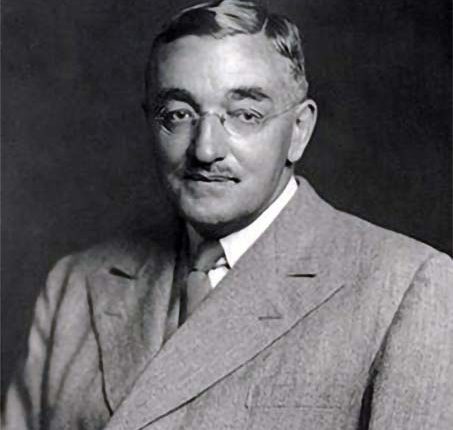
Despite uniting Nigeria’s regions in 1914, the British Government likely understood that a country with such diverse ethnicities, languages, and cultures would struggle under a centralized government. Colonial Governor Sir Arthur Richards hinted at federalism before the 1946 Richards Constitution, advocating for a political system allowing different regions to progress towards unity without losing their unique identities.
It was Sir John Macpherson, Richards’ successor, who explicitly addressed the issue of Nigeria’s structure: Should Nigeria have a centralized system or a federal one with regional autonomy? The Macpherson Constitution of 1951 only partially addressed this question. The push for self-government in 1953, supported by the Western and Eastern Regions, underscored the necessity of full federalism, leading to the Kano riots and Northern Region’s demands for autonomy and a confederation.
The London and Lagos Conferences of the mid-1950s paved the way for Nigeria’s federal constitution of 1954, balancing the country’s diverse interests. However, military regimes later eroded this federal principle, creating a unitary system masked as federalism. This shift has sparked political crises, militancy, and insecurity.
The current economic paradox, where increasing oil revenues result in greater poverty, stems from abandoning the founding fathers’ vision of fiscal federalism, which promoted regional self-sufficiency. Significant development occurred during the era of genuine federalism.
We urge the National Assembly to urgently amend the 1999 Constitution to facilitate true federalism. Political maneuvering and elections alone will not solve Nigeria’s deep-seated issues.
 News Editor