
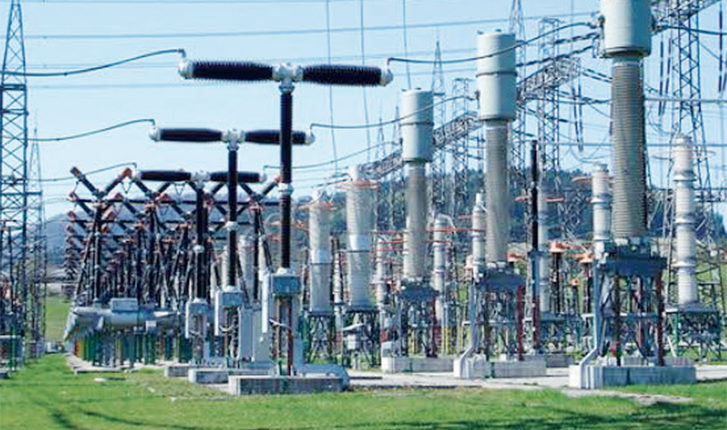
Northern Nigeria’s ongoing electricity crisis shows little sign of improvement as new reports highlight systemic mismanagement and neglect. A shortage of critical transmission infrastructure continues to leave the North West and North East regions struggling with extended power outages.
Sources indicate that the Transmission Rehabilitation and Expansion Programme (TREP), which aimed to enhance electricity distribution, has been marred by misappropriation of funds. Approximately $1.661 billion intended to upgrade the power grid has been mismanaged, while over $500 million allocated to the Eastern Backbone project remains unaccounted for. This project was meant to strengthen transmission lines reaching key areas such as Sokoto, Katsina, Yola, and Calabar, but significant progress has yet to be seen.
The power situation in the North West remains dire due to the destruction of two 330kV single circuits connecting Shiroro to Kaduna, leaving only the fragile Jos-Kaduna line to serve the entire region. Similarly, the North East depends heavily on the single 330kV Jos-Gombe line, making both areas susceptible to severe power shortages.
Although the Jos-Kaduna direct current line was completed, critical connection bays at both locations were not finalized. Contracts to finish these components were canceled and handed over to engineers from the Transmission Company of Nigeria (TCN), who retrieved parts from Anambra. Despite their readiness, the work was later reassigned to contractors with a history of incomplete projects.
“If TCN engineers had continued, the bays could have been operational within five months,” one source noted, criticizing the decision to revert the work to unreliable contractors.
The infrastructure weaknesses raise concerns over potential vandalism. “If the Jos-Kaduna line were attacked, the entire North West would face a blackout, similar to what the North East experienced earlier this year,” another source warned.
The contrast in development is stark. Under former NEPA General Manager Engr. Shomolu, the South benefited from robust 330kV and 132kV power lines. In contrast, Northern resources have often been diverted to lower-capacity projects, leaving the region without the necessary infrastructure to meet growing demand.
“TREP was supposed to close the gap, but it has faced repeated sabotage,” said a source, emphasizing the deep-rooted challenges in resolving the North’s power crisis. “While the South thrives on past infrastructure achievements, the North continues to face setbacks.”
In response to the worsening situation, the Economic and Financial Crimes Commission (EFCC) has launched an investigation into electricity companies. This probe, announced by EFCC Chairman Ola Olukayode, aims to identify the factors contributing to frequent national grid failures. He noted that budget allocations for power infrastructure have underperformed, with execution rates below 20 percent, and cited the use of substandard equipment by some electricity companies as a significant issue.
Olukayode also responded to criticisms of the EFCC’s focus on cybercrime, arguing that economic sabotage, including financial misdeeds in the energy sector, poses a major threat to Nigeria’s economy and stability. “No financial crime is too small to investigate, and no one is too big,” he emphasized, signaling a commitment to pursue both large-scale and smaller offenses that could undermine the nation’s development.
 News Editor