
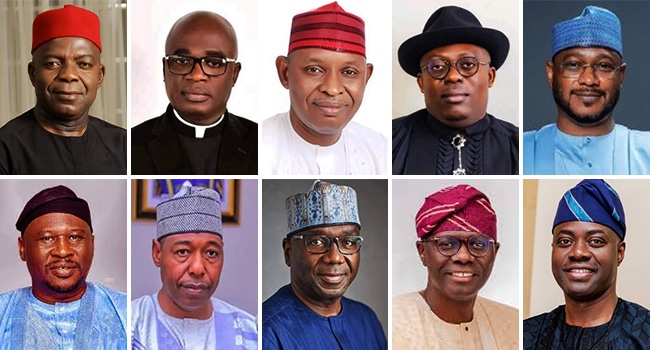
Despite a recent agreement between the Federal Government, Labour, and the Organised Private Sector (OPS) to set the new minimum wage at ₦70,000, many states remain hesitant to adopt the new standard. While Nasarawa, Enugu, and Akwa Ibom have committed to paying the new wage, several other states express the need for further consultations or await the decisions of their counterparts.
In Delta State, the Secretary to the State Government, Dr. Kingsley Emu, highlighted the complexity of the situation, stating that any decision must consider various factors and be approached practically. He expressed confidence that Governor Sheriff Francis Oborevwori would make an appropriate decision in due course.
The Nigeria Governors’ Forum (NGF) is currently assessing each state’s fiscal capacity to determine sustainable wage levels. Although various wage adjustments have been recently adopted, the tripartite committee on the National Minimum Wage is still in consultation.
Imo State Commissioner for Labour, Ford Ozumba, indicated that Imo would follow suit only if other states adjust to the new wage bill. Similarly, Ebonyi State’s Commissioner for Information, Jude Okpor, stated that their decision would depend on the outcome of ongoing consultations.
Rivers State has yet to announce its stance on the new minimum wage. Kano State is studying the agreement before making a decision, while Osun State Governor, Ademola Adeleke, pledged to comply with the new wage standard, emphasizing his commitment to workers’ welfare.
Abia State plans to review the new wage with its economic team, and Benue State has vowed to implement the ₦70,000 minimum wage once it becomes law. However, the situation in Adamawa remains uncertain, as Governor Ahmadu Fintiri has not yet addressed the issue.
Nasarawa State Governor, Abdullahi Sule, confirmed that his state would pay whatever amount is agreed upon by all governors. Meanwhile, Akwa Ibom and Enugu have expressed readiness to pay the new minimum wage, with both state governments affirming their commitment to workers’ welfare.
As states continue to deliberate, the implementation of the new minimum wage across Nigeria remains uncertain, with financial capabilities and budget impacts being major considerations for state governments.
 News Editor