
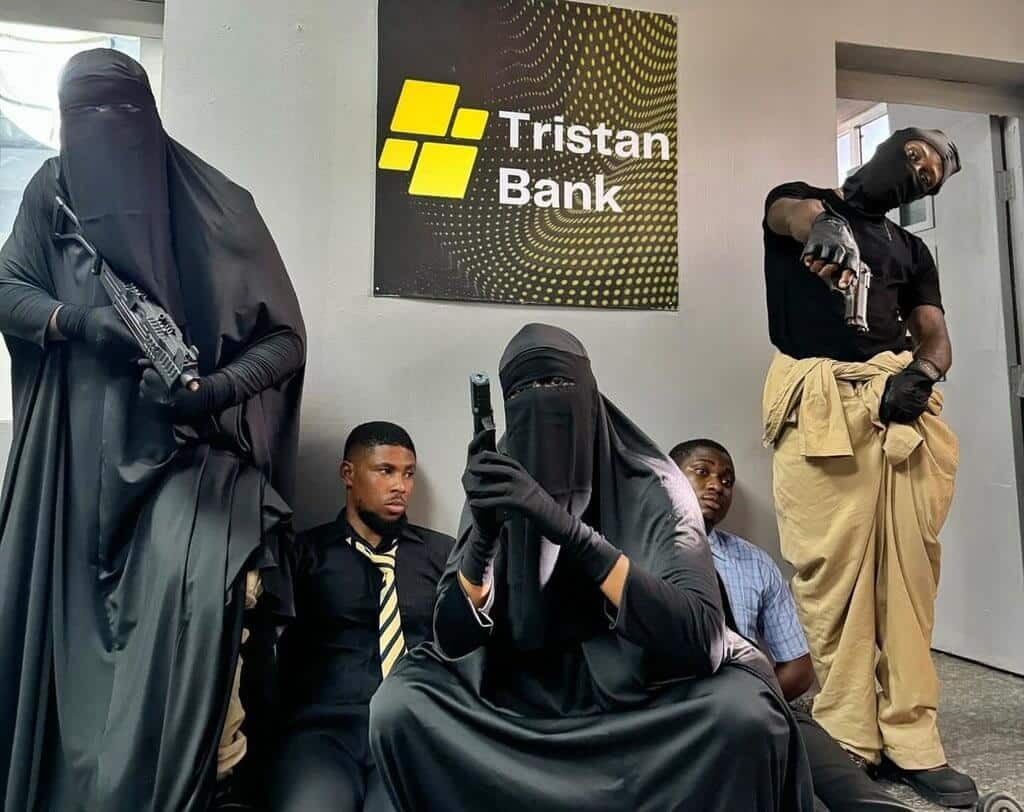
The National Film and Video Censors Board (NFVCB) has responded to the backlash surrounding a movie poster that has sparked criticism from the Muslim community on social media.
In a statement released on Thursday, the NFVCB clarified that the movie in question, which has been trending on X, has not yet been released to the Nigerian market.
The poster features three women in hijabs holding guns beside their captives, with two women standing and one squatting.
One of the prominent critics of the poster, Bashir Ahmed, former Digital Communication Assistant to ex-president Muhammadu Buhari, condemned the portrayal. He argued that the hijab, a symbol of respect, modesty, and religious devotion for Muslim women, was being misused as a mere costume associated with negative moral vices.
“I join my brothers and sisters to strongly protest the use of the Hijab (Niqab) in an upcoming Nigerian movie produced by Ms. Bolanle Ayo. The Hijab is deeply attributed to Muslim women and should not be used in a manner that suggests criminal behavior. This is a profound disrespect to our mothers, sisters, and daughters,” Ahmed stated.
Ahmed urged the NFVCB to take action against the movie, suggesting that alternative costumes such as balaclavas or masks could have been used instead.
In response, the NFVCB assured that it is committed to preserving Nigeria’s culture and values. They confirmed that the movie has not been released or submitted to the NFVCB for classification, as required by law.
“Our investigation revealed that the movie has not been released and has not been submitted to the NFVCB for classification. We have reached out to the producers and have taken steps to address the concerns raised,” the NFVCB stated.
The board emphasized its role in ensuring that films and video works do not abuse, denigrate, or undermine religious, cultural, and ethnic sensibilities. The NFVCB is dedicated to contributing to the positive transformation of Nigerian society through the classification of films while balancing freedom of expression within the law and minimizing social, cultural, and religious harm.
 News Editor