
By Zhou Zhou, Chu Jun, People’s Daily
The sixth China International Consumer Products Expo (CICPE) was held in Haikou, south China’s Hainan province from April 13 to 18. The exhibition area and number of participating countries and regional delegations have reached record highs, demonstrating the enduring resilience and global appeal of China’s consumer market.
This year’s expo, themed “Opening Up Drives Global Consumption, Innovation Empowers A Better Life,” focused on emerging consumption trends including eco-friendly, health-focused, digital and smart products, while serving as a key platform for global business cooperation.
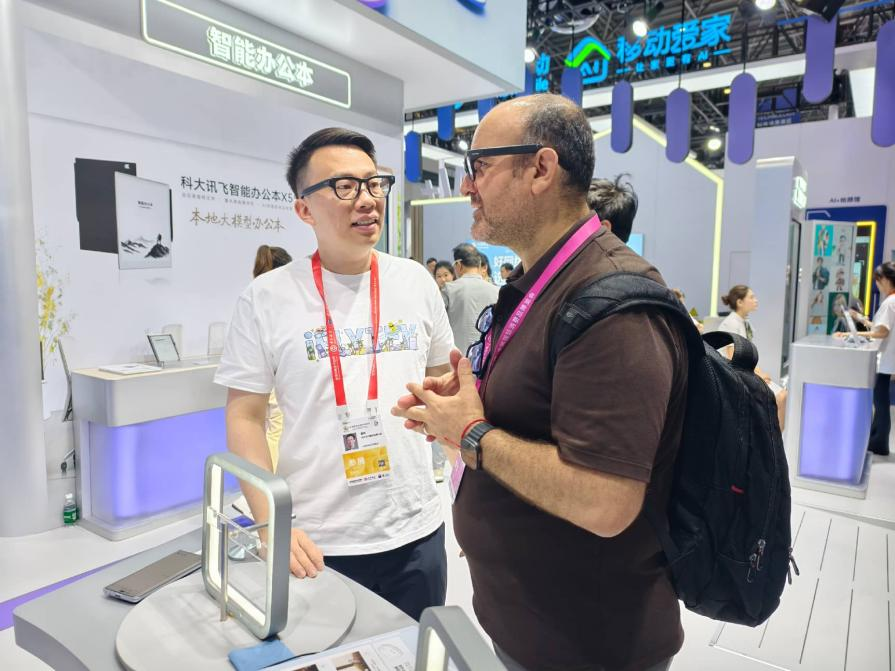
Across the exhibition halls, cutting-edge innovations offered a glimpse into the future of consumption. A modular flying car developed by Chinese tech company XPeng AEROHT sketched out new possibilities for three-dimensional mobility; AI-powered smart glasses by Hangzhou Lingban Technology Ltd. demonstrated real-time translation in 89 languages; and Unitree’s humanoid robots interacted naturally and smoothly with visitors.
“China isn’t only the world’s manufacturing hub anymore,” said Fred, a Zambian buyer who has attended the expo for several consecutive years, adding that the country is now globally competitive in smart devices and high-tech innovation.
Over 200 new products made their debut at this year’s expo, twice the figure recorded last year.
“The expo lets us closely track shifting consumer tastes and demands across China,” said Cai Yiping, head of brand management at Singapore-based massage chair brand OSIM, a long-term regular exhibitor at the event. Six years of participation revealed Chinese consumers’ growing demand for scientific, personalized wellness solutions, prompting OSIM to expand its R&D investment and market presence.
The international specialty goods exhibition area brought together premium goods from around the world, including alpaca wool bedding from New Zealand, wine from South Africa, and bird’s nest products from Malaysia. The event attracted more than 3,400 brands from over 60 countries and regions, with international exhibitors accounting for 65 percent of the total, up 20 percentage points from the previous expo.
Honored guest country Canada sent its largest-ever delegation. “Since the inaugural 2021 Expo, Canada has consistently expanded its presence,” stated Behzad Babakhani, Consul General of Canada in Guangzhou. “We’re committed to introducing premium Canadian products to China.”
At Namibia’s national pavilion, marula oil skincare and daily care products exuded a delicate natural fragrance. Ella, a representative from SheaCoco, explained product highlights to visitors in fluent Mandarin.
She noted that China’s preferential tariff policies and simpler cross-border trade procedures have greatly increased China’s imports of African natural resources. This has broadened export avenues for African produce, driven coordinated growth across planting, harvesting, processing, logistics and trade, and effectively upgraded living standards for local communities.
Through the expo, the world has gained a clearer view of the dynamism of China’s market and the country’s commitment to high-level opening up, strengthening their confidence in cooperating with China.
At a procurement service center, a series of matchmaking events created a lively atmosphere, with deals being signed throughout the day. For the first time, the expo introduced an offline buyer service center, offering full-process support to match suppliers and buyers — a service widely praised by participants.
“This is my first CICPE, and I was surprised by how many business opportunities there are. I’ll definitely return next year,” said Alvin Cheng, founder and CEO of Iconthin Biotech. His company has already reached preliminary cooperation agreements with several partners.
“The expo is a great platform to promote our products. China’s consumer market holds enormous potential, and we plan to invest more and grow our business here,” Cheng added.
The expo also highlighted the fast-growing appeal of the Hainan Free Trade Port, which started island-wide independent customs operations on Dec. 18 last year.
“In little over 100 days, three batches of our coffee products qualified for duty-free value-added processing, reducing our costs by about 8 percent,” said Ye Jian, general manager of Charoen Pokphand Group (Hainan) Xinglong Coffee Industry Development Co., Ltd..
“The policies of zero tariffs, low tax rates, and a simplified tax system have delivered tangible benefits and opened up new opportunities for trade and investment,” said Xue Zengyi, vice chairman of Charoen Pokphand Group Agro-Industry & Food Business.
Saravoot Yoovidhya, CEO of Thailand’s TCP Group, said that the synergy between Hainan Free Trade Port policies and the Regional Comprehensive Economic Partnership (RCEP) is creating new opportunities for trade facilitation and efficient global resource allocation. It has further strengthened the company’s confidence in expanding operations in Hainan and deepening its business layout in China, he added.