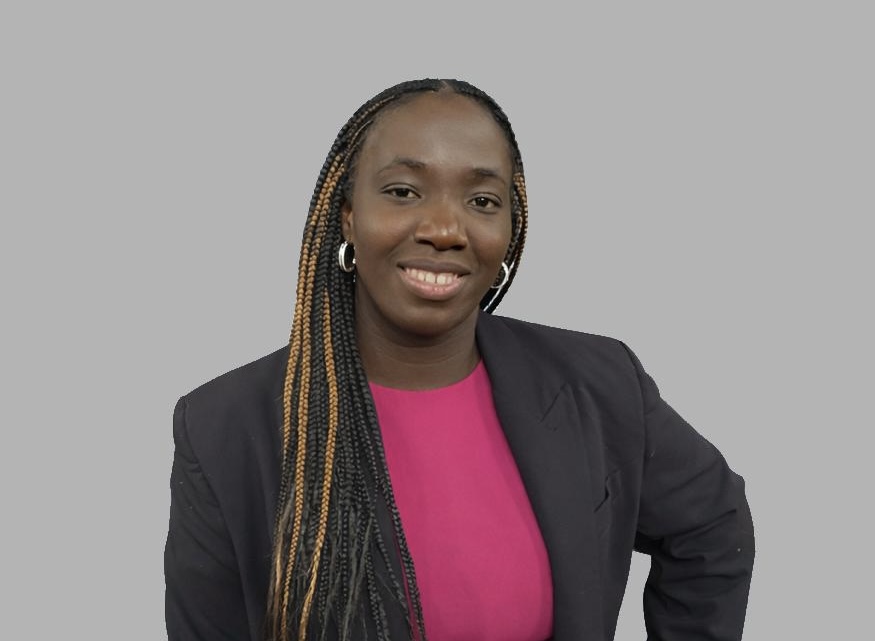
Can you tell us about your professional journey and what brought you to legal academia in the United States? My professional path has spanned different legal systems and dimensions of legal practice. I received my initial legal education in France and began my career in commercial practice, spending nearly five years as in-house counsel for a financial institution. My work involved negotiating and drafting commercial financing agreements and advising on contractual and transactional matters. After moving to the United States, I earned an LL.M. from Boston University School of Law. I later returned to Boston University School of Law as a Visiting Assistant Professor, where I taught Contract Drafting and served as a guest lecturer in Negotiation, and I was admitted to practice in New York and Massachusetts. That combination of transactional practice, dual legal training, and teaching ultimately shaped my scholarly interests. I became particularly interested in how legal systems allocate contractual risk and how differences in legal doctrine affect parties when circumstances change dramatically after a contract is formed.
What is the central focus of your scholarship? My research primarily focuses on contract law, comparative contract law, and the allocation of contractual risk in the context of extraordinary events. One question that particularly interests me is what happens when circumstances change fundamentally after the parties enter into an agreement. The COVID-19 pandemic illustrated the practical importance of that question. Businesses suddenly faced government shutdowns, supply-chain disruptions, labor shortages, and other circumstances that made contractual performance impossible or substantially more difficult. My scholarship examines how American contract law responds to those situations and allocates risks, and compares that response with the French legal framework, particularly the codified doctrine of force majeure. More broadly, I am interested in how contract law can preserve commercial predictability and freedom of contract while providing sufficiently clear rules for circumstances that parties cannot reasonably anticipate or control.
Why compare French and American contract law? Comparative law provides an opportunity to question assumptions that can become almost invisible when we study only one legal system. France and the United States offer a particularly interesting comparison because they approach contract law from different legal traditions. French law provides a statutory definition of force majeure in Article 1218 of the Civil Code, whereas American law addresses similar problems through a combination of contract language and common-law doctrines such as impossibility and impracticability. I am not interested in arguing that one legal system should simply copy the other. Rather, comparison allows us to identify the advantages and limitations of each approach and ask whether particular features could improve predictability, risk allocation, and judicial administration in another system.
Why is force majeure still important now that the COVID-19 emergency has passed? Because COVID-19 exposed a much broader contractual problem. The next systemic disruption need not be another pandemic. Businesses increasingly operate in an environment affected by geopolitical conflict, natural disasters, supply chain disruptions, government restrictions, technological disruptions, and other events that can interfere with contractual performance. The fundamental legal question remains the same: Who should bear the risk when an extraordinary event disrupts performance? That question has consequences not only for litigation after a crisis occurs, but also for how lawyers draft contracts beforehand. Clearer legal rules can affect bargaining, pricing, insurance, contractual drafting, and ultimately transaction costs.
Recent tariff changes have created uncertainty for businesses operating under existing contracts. How does that connect with your research on force majeure and contractual risk? Tariffs illustrate the broader problem at the center of my research: how contract law allocates the risk of extraordinary changes after parties enter into an agreement. Imagine a business that enters into a long-term supply contract at a fixed price and subsequently faces a substantial new tariff on an essential imported component. Performance may still be possible, but the transaction’s economics may change dramatically. That raises an important question: who should bear that additional cost? The answer may depend first on the contract itself, whether the parties addressed tariffs, changes in law, price adjustments, or governmental actions. But when the agreement does not clearly allocate that risk, the uncertainty exposes the importance of the background legal rules. That is where tariffs connect directly with my research. I am interested in whether contract law provides sufficiently predictable rules for allocating extraordinary risks while still respecting the parties’ freedom to allocate those risks differently through their agreements.
Can a new tariff constitute force majeure, and might French and American law approach that problem differently? A new tariff does not automatically constitute force majeure. That distinction matters because an event that makes performance significantly more expensive (usually characterized as hardship) is not the same as an event that prevents performance (impossibility of performance). Under American law, much depends on the contract language and the governing law. A court may examine whether the force majeure clause encompasses governmental action or changes in law, whether the parties allocated tariff risk elsewhere in the agreement, and whether doctrines such as impossibility or impracticability are potentially relevant. French law offers an interesting comparison because Article 1218 of the Civil Code codifies force majeure, while Article 1195 separately addresses imprévision, or changed circumstances, where an unforeseeable change makes performance excessively onerous for a party that did not accept that risk. A tariff that primarily changes the economic burden of performance therefore raises an especially interesting question about the distinction between force majeure and hardship. In addition, absent a provision allocating this risk in the agreement, French law does not recognize an event as force majeure if it was foreseeable at the time of contracting because it had previously occurred. Comparing the two systems does not necessarily tell us that one approach is superior. Instead, it helps illuminate a broader question at the center of my scholarship: whether clearer distinctions among force majeure, impossibility, impracticability, and hardship could improve predictability in American contract law while preserving freedom of contract.
What have you identified as one of the difficulties with the American approach? One difficulty is fragmentation. American law lacks a single, comprehensive statutory force majeure doctrine applicable to contracts generally. Parties often depend heavily on the language of their agreements and overlapping doctrines such as impossibility, impracticability, and frustration of purpose. Although the doctrine of impossibility serves as the functional equivalent of force majeure in American law, its relationship with contractual force majeure clauses, commercial impracticability, and frustration of purpose has become increasingly blurred. The result is a body of law characterized by inconsistent judicial reasoning and diminished predictability. The solution proposed in my research paper is not to adopt an entirely new doctrine but to codify an existing one. Codification would provide a uniform legal framework that defines force majeure, clarifies its relationship with existing doctrines, and establishes consistent standards for its application.
Does that mean you believe the United States should simply adopt the French model? No. Comparative scholarship is most useful when it avoids that type of assumption. French law has its own complexities and limitations. The important question is not whether French law is categorically “better,” but what the American system can learn from another mature legal system that has made different institutional choices. For example, codification can increase accessibility and provide a common doctrinal starting point. At the same time, excessive rigidity may prevent courts from responding appropriately to unusual circumstances. The challenge is finding the appropriate balance among predictability, flexibility, freedom of contract, transaction costs, and judicial administrability.
How did your experience as in-house counsel influence this research? It profoundly influenced the questions I ask. As in-house counsel, I saw contracts as more than abstract legal documents. They allocated real economic risks between businesses. Negotiating financing arrangements required thinking prospectively about what could go wrong, which party should bear which risks, and how to reflect that allocation in the contractual language. That experience continues to influence my scholarship. When I examine a doctrine, I am interested not only in what courts say after a dispute has occurred but also in how the rule affects lawyers and businesses when they structure transactions before a dispute exists.
How does your scholarship influence your teaching? I see teaching, scholarship, and practice as closely connected. When co-teaching Contract Drafting, I want students to understand that drafting is not simply about producing elegant language. A transactional lawyer must identify risks, determine how to allocate those risks, understand the client’s objectives, anticipate potential disputes, and translate those decisions into precise contractual provisions. My comparative background also allows me to encourage students to question why a particular legal rule exists rather than simply memorize it. Looking at another legal system can reveal that rules we sometimes regard as inevitable are, in fact, policy and institutional choices.
What does your international background contribute to your work as a scholar? It allows me to move between legal traditions and understand legal problems from multiple institutional perspectives. Having studied and worked within a civil-law environment before developing my academic and professional career in the United States, I have experienced firsthand how lawyers trained in different systems conceptualize similar contractual problems differently. That perspective is particularly valuable in commercial law because modern transactions are often cross-border. Lawyers need to understand not only the law governing a transaction but also how counterparties from different legal traditions may approach concepts such as contractual interpretation, good faith, hardship, and force majeure.
What do you hope your scholarship will contribute to American contract law? I hope it contributes to a broader discussion about how American contract law should respond to systemic disruption. Rather than treating extraordinary events as isolated anomalies, I think contract scholars and practitioners should consider how legal rules influence risk allocation before, during, and after major disruptions. My objective is to examine whether aspects of comparative law can help develop rules that provide greater predictability while preserving contractual autonomy and appropriate flexibility. Ultimately, good contract law should help parties understand the consequences of their agreements before disputes arise, not merely give courts tools to resolve disputes afterward.
What are the broader implications of this research for businesses and practicing lawyers? The implications are quite practical. When the law is uncertain, lawyers may respond by drafting increasingly detailed provisions to address potential contingencies. That can increase transaction costs, and even very sophisticated contracts cannot anticipate every possible event. Conversely, clear default rules can provide a background against which parties negotiate. Parties who prefer a different allocation of risk can still contract around appropriate default rules where the law permits. That is why questions about force majeure and contractual risk are not merely theoretical. They affect contract drafting, negotiation strategy, pricing, litigation risk, and commercial planning.
Where do you see your research developing next? My broader research agenda examines how contract law allocates risk in increasingly complex and standardized commercial environments. Force majeure provides one important entry point, but similar questions arise with boilerplate provisions, standardized agreements, technological contracting, and potentially AI-assisted contract formation and drafting. I am interested in examining how contract law can maintain predictability and freedom of contract while responding to changes in the way agreements are negotiated, drafted, and performed.
What perspective does your combination of transactional practice and comparative legal training bring to American contract-law scholarship? I hope to contribute a perspective that combines comparative scholarship, transactional experience, and practical legal education. My professional experience taught me how contractual rules operate inside actual commercial relationships. My comparative background allows me to examine those rules across legal systems. Teaching also gives me the opportunity to translate both perspectives for the next generation of lawyers. I see those dimensions as mutually reinforcing. Scholarship can identify problems in doctrine; practice can reveal their real-world consequences; and teaching can prepare lawyers to address those problems more effectively.
How has your scholarship and work in contract law been recognized within the academic and legal communities? My scholarship has increasingly created opportunities for engagement and recognition within academic and legal communities. I presented my research on comparative contract law and force majeure at academic conferences, where I discussed the work with scholars in the field, and my article examining the French and American approaches to force majeure has been accepted for publication in the South Carolina Journal of International Law & Business. My work has also extended into legal education. At Boston University School of Law, I co-taught Contract Drafting and was invited to contribute as a guest lecturer in Negotiation, bringing my transactional experience and comparative perspective into the classroom. As I continue developing this research agenda, I hope to deepen that engagement through publication, scholarly exchange, and continued participation in academic and professional legal communities.
 By News Editor
Sep 12, 2026